
This SEO guide for small businesses will show you the exact steps needed to grow your online presence in 2026. Search engines have changed, and old methods are no longer enough to stay competitive. Today, success depends on helpful content, strong technical performance, and real trust signals.
In this guide, you will learn modern SEO strategies that focus on search experience, user intent, and long-term results. These simple but powerful methods can help small businesses improve rankings, attract the right visitors, and turn traffic into real customers.
Whether you are just starting or improving your current website, this SEO guide for small businesses will give you a clear roadmap to follow in 2026.
Table of Contents
The New Reality of Search
Search engine optimization has changed a lot by 2026. It is not only about ranking on page one anymore. What matters most now is helping the user.
Search engines like Google are much smarter today. They use advanced AI to understand what people really want when they search. They do not just look at keywords. They try to understand the reason behind the search.
This means your website must give clear and helpful answers. If your page solves a problem, it has a better chance of ranking higher.
For small businesses, this change is important. Old SEO tricks no longer work well. You must focus on helpful content, a fast website, and a good user experience.
The good news is that small businesses can still win. You do not need a huge budget to rank well. If your content is useful and easy to understand, search engines can show your website to more people.
This SEO guide for small businesses will show you simple steps to help your business grow online and stand out in search results in 2026.
The Strategy: Mindset Shift for 2026
In 2026, SEO is about “Search Experience”. Users want answers instantly. They use voice commands, images, and AI assistants.
The way businesses approach SEO must change in 2026. Search is no longer about placing keywords and hoping to rank higher. Today, success depends on how well a website helps its visitors. People expect quick answers, simple navigation, and useful information the moment they land on a page.
Search platforms such as Google now evaluate websites based on real value. Pages that clearly solve problems, explain topics well, and guide users to the next step perform much better in search results. This means businesses need to think beyond rankings and focus on the full search experience.
For small businesses, this shift creates an opportunity, and this SEO guide for small businesses highlights the best way to use it. Instead of trying to compete with large companies on volume, they can win by being more helpful, more focused, and more trustworthy in their niche.
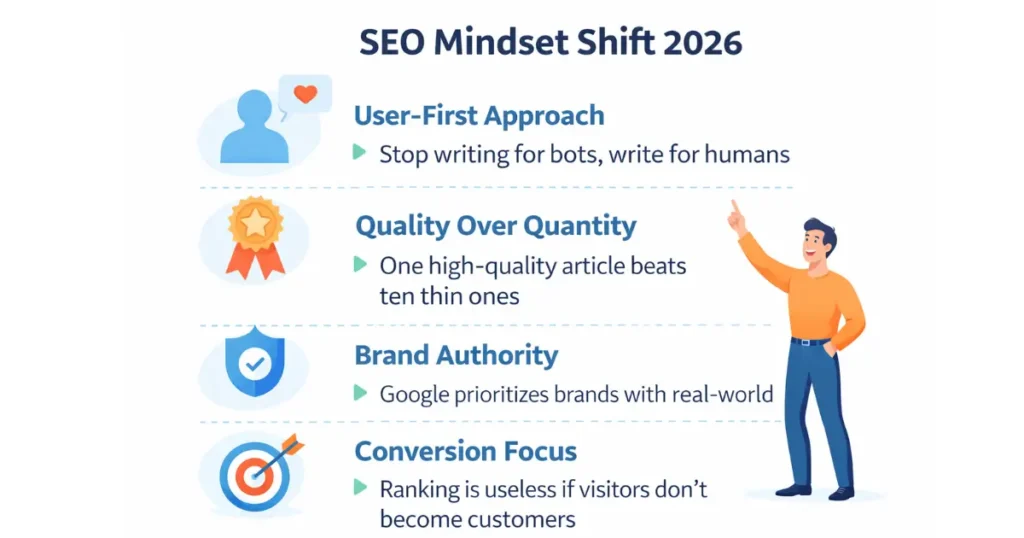
Here are some key SEO strategies for small businesses to follow in 2026:
• User-First Approach: Stop writing for bots and start writing for people.
• Quality Over Quantity: One high-quality article is better than ten thin ones.
• Brand Authority: Google prioritizes brands that show real-world expertise.
• Conversion Focus: Ranking is useless if visitors don’t become customers.
When you focus on the full search experience, your website becomes more useful and more competitive. By following these strategies, small businesses can improve visibility, build trust, and achieve better results in modern search. This approach supports long-term growth instead of short-term rankings.
Keyword Research 3.0: Intent and Context
Keyword research is the foundation of your success. However, the old way of looking at search volume is dead.
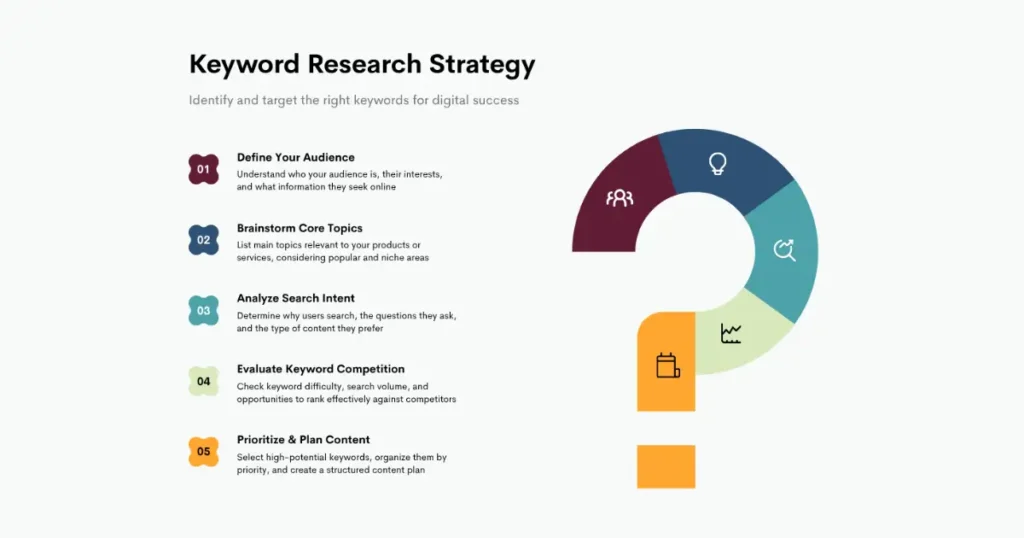
Keyword research is still the base of good SEO. But the way we find keywords has changed. In the past, many people only looked at search volume. They tried to pick the keywords with the biggest numbers. Smart keyword selection is explained clearly in this SEO guide for small businesses.
Today, search engines like Google look deeper. They try to understand what the user really wants. This is called search intent. A person may want to learn something, buy a product, or find a specific website.
Because of this change, businesses must choose keywords in a smarter way. The goal is not only to get traffic. The goal is to attract the right visitors who are more likely to become customers.
Here are some modern keyword research methods that work well in 2026:
• Search Intent Mastery: Identify if the user wants to learn, buy, or find a specific site.
• Conversational Keywords: Target natural phrases like “how do I fix my leaky roof?”
• Long-Tail Advantage: Use specific phrases to attract highly qualified leads.
• Zero-Volume Keywords: Sometimes keywords with no search volume are the most profitable.
• Topic Clusters: Group related keywords to show Google you are an authority.
• Competitor Gap Analysis: Find keywords your competitors are missing and claim them.
When you use modern keyword research methods, you attract better visitors to your website. Instead of focusing only on numbers, you focus on real user needs. This approach helps improve traffic quality, increases engagement, and supports long-term growth for your business.
Technical SEO: The Invisible Engine
Your website must be fast, secure, and easy to crawl. Without a strong technical foundation, your content will never rank.
Technical SEO works like the engine of your website. This SEO guide for small businesses highlights the importance of mobile-first indexing. People may not see it, but it keeps everything running smoothly. In this SEO guide for small businesses, it is important to understand that even great content cannot rank if the website has technical problems.
Search engines like Google want websites that are fast, safe, and easy to explore. If a site loads slowly or has errors, search engines may not rank it well. Visitors may also leave the site before reading the content.
For small businesses, fixing technical SEO issues can make a big difference. A fast and secure website helps search engines crawl your pages and helps users stay longer on your site.
Here are some important technical SEO factors to focus on in 2026:
• Mobile-First Indexing: Your mobile site is now your primary site.
• Lightning Speed: Pages should load in under two seconds.
• HTTPS Security: Your site must use encryption to protect user data.
• Clean Code: Remove extra scripts that slow down your site.
• XML Sitemaps: Help search engines find and index your pages faster.
• Broken Link Repair: Check your site often and fix 404 errors.
When your website has strong technical SEO, everything works better. Fast speed, good security, and clean structure help search engines understand and index your pages correctly. By fixing technical issues regularly, small businesses can improve performance, user experience, and long-term search visibility.
Structured Data: The Secret Language
Schema markup helps Google understand your content at a deeper level. It turns your search result into a “Rich Snippet”.
Structured data is a special code that helps search engines understand your website better. In this SEO guide for small businesses, structured data is an important tool because it tells search engines what your content means, not just what it says.
Search engines like Google use this code to show better search results. You can use Google’s official Rich Results Test tool for free to check whether your schema markup is eligible for rich results and identify any issues that need to be fixed. When structured data is added to a page, your result can appear with extra details such as stars, prices, or questions and answers. These results are called rich snippets, and they often get more clicks from users. Rich snippets are easier to achieve with this SEO guide for small businesses.
For small businesses, this is a simple way to stand out in search results. This SEO guide for small businesses focuses on real results and growth. Even if your website is new, structured data can make your listing look more helpful and trustworthy.
Here are some important types of schema you can use:
• Local Business Schema: Helps search engines know your business name, address, and location.
• Product Schema: Shows product prices and availability in search results.
• Review Schema: Displays star ratings to build quick trust with users.
• FAQ Schema: Shows questions and answers directly in search results.
When you use structured data correctly, your website becomes more visible and more attractive in search results. Rich snippets can increase clicks and improve user trust. For small businesses, schema markup is an easy and powerful way to improve search performance without changing the main content of your page.
On-Page SEO: Beyond Keyword Stuffing
In 2026, On-Page SEO is about semantic relevance. Google no longer counts how many times you use a word. It looks at how well you cover a topic.
On-page SEO has changed a lot in recent years. In the past, many people tried to rank pages by repeating the same keyword many times. According to this SEO guide for small businesses, headings play a key role in content clarity. Today, search engines focus more on topic understanding. They want to see if your page explains a subject clearly and answers the user’s questions.
Search systems from Google now look at the overall meaning of a page. They check if your headings, text, and images all support the same topic. A well-structured page helps both users and search engines understand your content quickly.
For small businesses, this means writing pages that are clear, helpful, and easy to read. When your page explains a topic well, it has a better chance of ranking and keeping visitors on your site.
Here are some important on-page SEO practices to follow:
• User-Centric Headers: Use H1, H2, and H3 tags to answer clear questions from users.
• The First 100 Words: Share your main idea early so readers understand the topic right away.
• LSI Keywords: Use related words that support your main topic, such as rankings, traffic, and backlinks.
• Image Optimization: Use WebP images for faster loading and write clear alt text for each image.
• Readability Scores: Write short sentences and use the active voice so more people can understand your content.
• Internal Link Strategy: Link new posts to other helpful pages on your website. This helps users and search engines explore your site.
When you follow these on-page SEO practices, your content becomes easier to understand for both users and search engines. A well-structured page improves readability, increases engagement, and helps your website rank more effectively. Strong on-page optimization also supports better user experience and long-term search performance.
The E-E-A-T Framework: Your Trust Shield
Experience, Expertise, Authoritativeness, and Trustworthiness (E-E-A-T) are the most important ranking factors for small businesses.
Trust is very important in modern search. Search engines want to show results from websites that people can rely on. This is where the E-E-A-T framework becomes important. It stands for Experience, Expertise, Authoritativeness, and Trustworthiness.
For small businesses, this framework helps prove that your website is real and reliable. When search systems from Google see strong trust signals, they are more likely to show your pages in search results.
In many cases, trust can matter even more than the size of your website. A small business that shows real knowledge and honest information can still compete with larger brands.
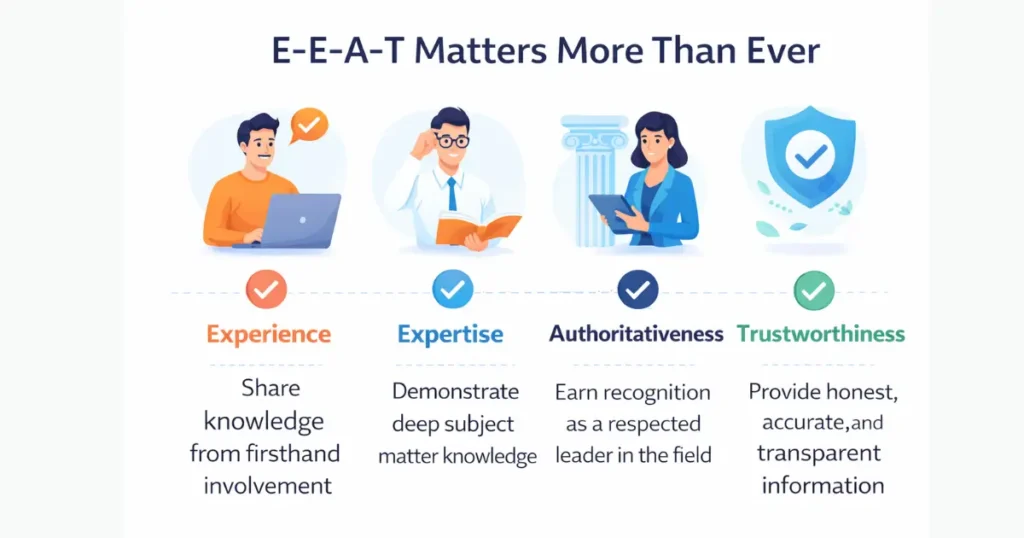
Here are the key parts of the E-E-A-T framework:
• Experience: Show real proof of your work. Add original photos of your team, projects, or services.
• Expertise: Include a clear author bio for each article. Link to the author’s professional profile or credentials.
• Authoritativeness: Create a strong “About Us” page. Share awards, memberships, or media mentions if you have them.
• Trustworthiness: Make your contact details easy to find. Use a professional email that matches your domain.
• Fact-Checking: Always check your facts. Link to trusted sources when you share important data.
When you apply the E-E-A-T framework correctly, your website becomes stronger and more trustworthy. Search engines and users both prefer websites that show real experience and honest information. By focusing on quality content, clear authorship, and transparent business details, small businesses can build long-term trust and improve their search performance.
Local SEO: Dominating Your Territory
For small businesses, local search is the primary source of leads. If you aren’t in the “Local Map Pack,” you are losing money.
Local SEO is very important for small businesses that serve a specific city or area. In many cases, local search brings the highest number of real customers. When people search for services near them, search engines show local results first.
For small businesses, strong local optimization can mean more calls, more visits, and more sales. In this SEO guide for small businesses, local SEO is one of the most powerful ways to grow without a big marketing budget.
Search engines use location signals to decide which businesses to show in the map results. If your business information is clear and consistent, you have a better chance of appearing in the local map section.
Here are the most important local SEO strategies for 2026:
• Google Business Profile (GBP): This is your second homepage. Keep it updated with new photos, posts, and correct information.
• The Review Loop: Ask happy customers to leave reviews. Reply to every review politely and professionally within 24 hours.
• Local Citation Cleanup: Make sure your Name, Address, and Phone number (NAP) are the same on all websites and directories.
• Geo-Targeted Content: Create separate pages for each service area. For example, write pages like “Best SEO Services in Islamabad” or other cities you serve.
• Local Backlinks: Support local events or partner with local organizations. Local links help improve neighborhood rankings.
When done correctly, local SEO helps your business appear in map results and nearby searches. This builds trust and brings customers who are ready to take action.
User Experience (UX): The Ranking Silent Partner
If users land on your site and leave immediately, Google will demote you. This is called “pogo-sticking.”
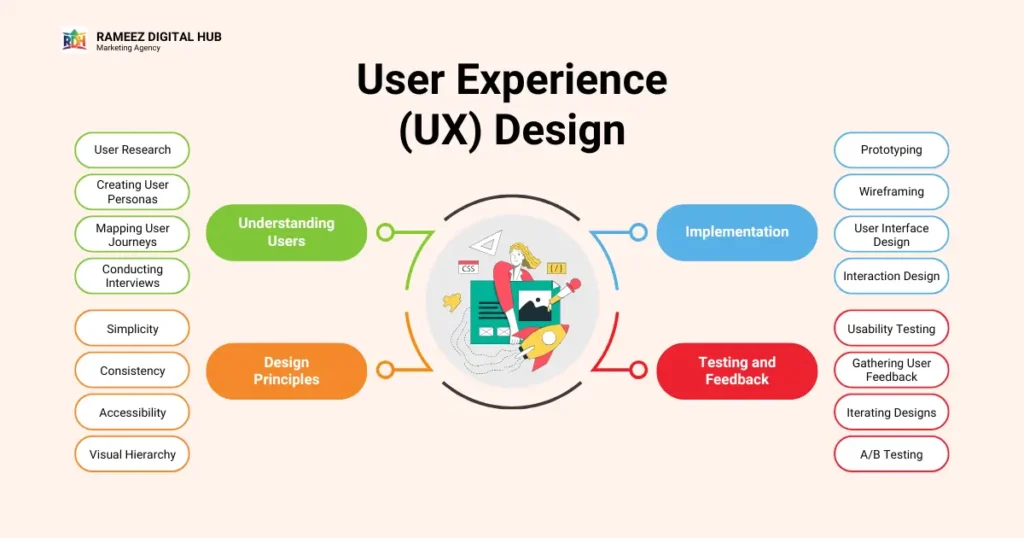
User experience, also called UX, is very important for modern websites. It means how easy and comfortable your website is to use. If visitors come to your site and leave quickly, search engines may think the page is not helpful.
In this SEO guide for small businesses, user experience plays a big role in rankings. Search engines track how people interact with your website. If users stay longer, click more pages, and read your content, it sends positive signals.
Good UX helps both visitors and search engines. When your website is simple and easy to use, people can find information faster. This improves trust and increases the chance of conversions.
Here are the key user experience factors for 2026:
• Mobile Responsiveness: Test your website on different screen sizes. Make sure buttons are easy to tap with a finger.
• Intuitive Navigation: Users should find important pages in three clicks or less.
• Visual Hierarchy: Use clear headings, bold text, and bullet points so content is easy to scan.
• Zero Pop-ups: Avoid large pop-ups that block content, especially on mobile devices.
When your website is easy to use, visitors stay longer. This improves engagement, builds trust, and supports better search performance.
Modern Link Building: Earning Authority
In 2026, low-quality backlink packages are a liability. Google’s AI now ignores most spammy links. You must focus on earning “Digital PR” and natural mentions.
Link building has changed a lot in recent years. In the past, many websites tried to buy cheap backlinks. Today, search engines use advanced systems to detect spam links. Low-quality link packages can hurt your rankings instead of helping them.
In this SEO guide for small businesses, the focus should be on earning real authority. The best links come from trust, value, and relationships. When other websites mention your brand naturally, it sends a strong signal of credibility.
Modern link building is about quality, not quantity. Your goal is to create content and connections that people genuinely want to share.
Here are the most effective link-building strategies for 2026:
• The “Resource” Strategy: Create original data, research, charts, or useful tools that other websites want to reference.
• Guest Posting with Purpose: Write articles only for relevant websites in your industry. Make sure the site has real traffic and a good reputation.
• Help a Reporter Out (HARO): Use platforms like Connectively or Featured to provide expert quotes for news articles.
• Fixing Broken Backlinks: Find broken links on other websites in your niche and offer your updated content as a replacement.
• Competitor Backlink Audits: Use SEO tools to see where your competitors get their backlinks. Then try to earn links from similar sources.
When done correctly, modern link building builds long-term authority. Strong, natural links help search engines trust your website and improve your overall visibility.
The AI Revolution: Using AI Without Getting Penalized
Google does not penalize AI content as long as it is helpful and accurate. However, “raw” AI text often fails to rank because it lacks personality.
Artificial intelligence is now a big part of content creation and search. Many businesses use AI tools to save time and improve productivity. In this SEO guide for small businesses, it is important to understand that Google does not punish AI content by itself. What matters is quality, accuracy, and usefulness.
Search engines focus on helpful information. If your content is clear, original, and valuable, it can rank well—even if AI was used to help create it. However, simple or unedited AI text often does not perform well because it may sound generic.
To use AI safely and effectively, follow these best practices:
• AI as an Assistant, Not a Writer: Use AI to create ideas, outlines, or research support. Always write and edit the final version yourself to keep a natural tone.
• Fact-Checking is Mandatory: AI can sometimes give incorrect information. Always verify facts, statistics, and dates before publishing.
• Add Personal Experience: Share real examples from your business. Use words like “I” and “We” to show real experience and build trust.
• Optimize for AI Search Results: To appear in AI-generated search summaries, use clear headings and give direct answers to common questions.
When used correctly, AI can support your content strategy. The key is to combine technology with human experience, accuracy, and clear writing. This balance helps your website stay competitive in modern search.
Content Refreshing: Keeping Your Rankings Alive
SEO is not a “set it and forget it” task. Content decays over time.
Search engine optimization is not a one-time task. It is an ongoing process. Over time, content can lose rankings if it is not updated. This is called content decay. Search engines prefer fresh, accurate, and updated information.
Content refreshing is very important for long-term success. Updating your old pages can sometimes improve rankings faster than creating new content. This SEO guide for small businesses encourages creating value-driven content.
Search engines reward websites that stay active and up to date. When you improve your existing articles, you show that your website is maintained and reliable.
Here are the best content refresh strategies for 2026:
• The 6-Month Audit: Review your top-performing pages every six months. Add new information, update statistics, and improve internal links.
• Pruning Low-Value Content: If a page has had no traffic for a long time, consider deleting it or merging it with a stronger page. This keeps your website clean and focused.
• Improving CTR (Click-Through Rate): If a page ranks well but gets few clicks, improve the title and meta description to make it more attractive and clear.
Regular updates help maintain strong rankings. Fresh and improved content keeps your website competitive and supports long-term growth. Growth and visibility go hand in hand in this SEO guide for small businesses.
The 2026 Small Business Success Checklist
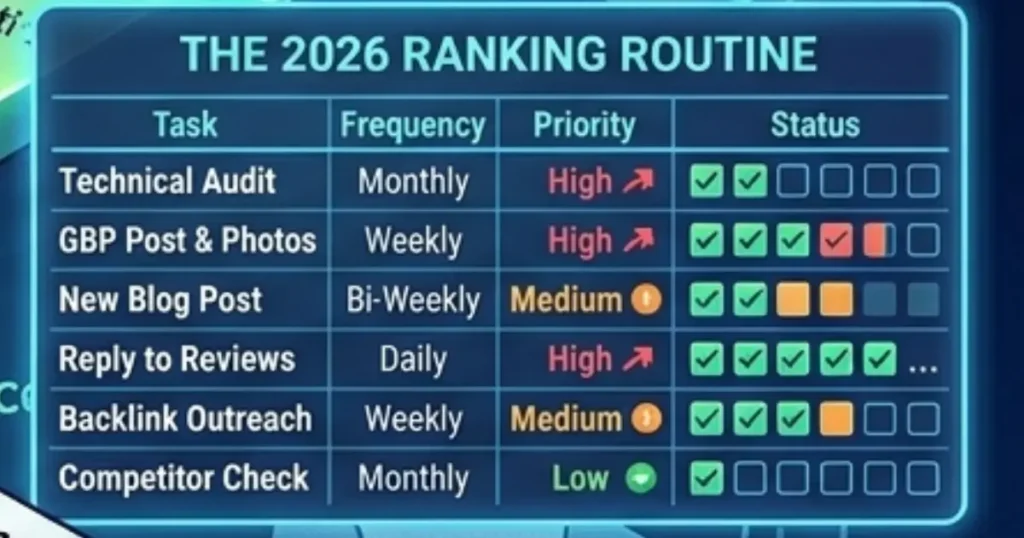
To rank #1 this year, follow this monthly routine:
| Task | Frequency | Priority |
| Technical Audit | Monthly | High |
| GBP Post & Photos | Weekly | High |
| New Blog Post | Bi-Weekly | Medium |
| Reply to Reviews | Daily | High |
| Backlink Outreach | Weekly | Medium |
| Competitor Check | Monthly | Low |
Whether you’re just getting started or improving your existing strategy, this SEO guide for small businesses provides practical steps to build a stronger search presence.
Final Thoughts: SEO Success for Small Businesses
SEO in 2026 is a marathon, not a sprint. By focusing on Technical Excellence, Human-Centered Content, and Local Authority, you can outrank even the biggest competitors. The key is consistency. Start with your technical foundation, build your trust through E-E-A-T, and never stop engaging with your local community.
Rameez Ahmed

Founder & Lead SEO Strategist, Rameez Digital Hub